Ninurta
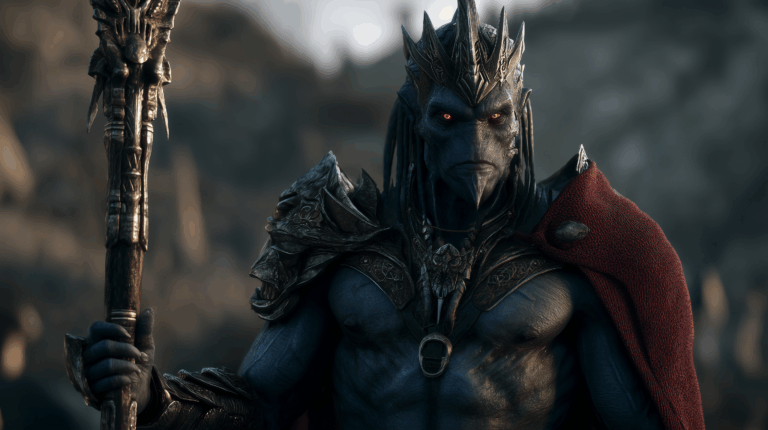
Ninurta, also known as Ningirsu in earlier Sumerian tradition, is a prominent deity in Mesopotamian mythology, associated with agriculture, healing, warfare, and law. As the son of Enlil, Ninurta’s maternal lineage varies depending on the myth; in Lugal-e, his mother is Ninmah (renamed Ninhursag), while in Angim dimma, Ninlil is identified as his mother. Ninurta’s consort is usually the healing goddess Gula, though in his Ningirsu form, he is paired with Bau, a deity primarily worshipped in Lagash.
Initially, Ninurta was revered as a god of farming and healing, believed to cure sickness and repel demons. However, as Mesopotamia’s focus shifted toward militarization, he evolved into a warrior god while retaining his agricultural attributes. His primary cult center was the Eshumesha temple in Nippur, but he was also deeply associated with Lagash, where King Gudea of Lagash rebuilt his temple, the E-ninnu, around 2144 to 2124 BCE. Ninurta later gained favor with the Assyrians, who honored him as a fierce protector. A guarantor of oaths and punishments for violators.
In the epic Lugal-e, Ninurta battles the demon Asag, using his enchanted mace Sharur, and reshapes the landscape by creating mountains from the stones of the vanquished warriors, channeling the rivers for irrigation. This narrative combines his roles as both a warrior and an agricultural deity. In another significant myth, Ninurta confronts the Anzû bird, a creature that steals the Tablet of Destinies from Enlil, disrupting the divine order. Ninurta’s eventual victory restores cosmic balance, reinforcing his position as a defender of divine authority. The tale, popular among Assyrian scholars, illustrates Ninurta’s bravery and loyalty to his father, Enlil.
Ninurta’s association with agriculture is also evident in the Sumerian Georgica, a text that offers detailed guidance on farming practices, from planting and tending crops to pest control. This blend of martial and agrarian traits is a key aspect of Ninurta’s character, underscoring his versatility as both a nurturer and a destroyer.
The god’s symbols include a plow, a perched bird, and possibly the winged disc, which some scholars speculate was initially associated with Ninurta before being linked to Ashur and utu-Shamash. In astrological terms, Ninurta was identified with Mercury in the MUL.APIN, a Babylonian astronomical compendium, though he was later associated with Saturn, while Mercury became linked to Nabu. Ninurta also held potential inspiration for the Biblical Nimrod, the “mighty hunter” of Genesis, due to shared attributes of strength and hunting prowess. The ruins of Kalhu, where Ninurta’s temple once stood, were later known in Arabic as Namrūd, further supporting the connection between the deity and Nimrod.
Ninurta’s importance in Assyrian royal ideology is evident from the names of several kings, such as Tukulti-Ninurta I and Adad-nirari II, who attributed their military successes to Ninurta’s favor. Ninurta’s role as a supporter of the Assyrian kings continued through the ninth century BCE, as seen in Ashurnasirpal II’s inscriptions crediting him for victories and dedicating his exploits to the god. Even after Kalhu ceased to be the Assyrian capital, Ninurta remained a respected deity, with legal documents invoking him as a guarantor of oaths and punishments for violators.
Ninurta’s is often depicted in stone reliefs, such as those from the temple at Kalhu, showing him in combat, especially against the Anzu bird.
His mythological narratives, like Ninurta’s Exploits, emphasize his strength, strategic skills, and organizational abilities, as he not only defeats enemies but also reshapes the physical world to benefit humanity. This aspect aligns with Ninurta’s role in establishing order and justice, themes that extend to his characterization as a deity of law and scribal knowledge.
The persistence of Ninurta’s cult is evident from discoveries at Girsu, where a five thousand years old ritual site dedicated to Ningirsu was uncovered in 2020, revealing artifacts linked to his worship. The 2023 identification of the Eninnu temple at Girsu further highlights his longstanding significance in Mesopotamian religious history. Despite the decline of his prominence with the rise of other gods like Marduk and Nabu, Ninurta’s legacy as a multifaceted deity of agriculture, war, and cosmic order endures as a central figure in Mesopotamian mythology.
Ninurta is the foremost son of Enlil and his official consort, Ninlil. As such, he holds a distinguished place within the Enlilite lineage—representing not only the strength and authority of Enlil’s house but also serving as its military and strategic champion. His role throughout the Anunnaki saga is marked by discipline, loyalty, and decisive action in the defense of the established divine order.
According to the Anunnaki theory, Ninurta is often referred to as the “warrior son” and functions as Enlil’s chief enforcer. When tensions rise among the Anunnaki, especially between the factions of Enlil and Enki, Ninurta is frequently at the center of the conflicts. He is depicted as the commander of advanced weaponry and the leader of numerous campaigns aimed at suppressing rebellion and maintaining order among the gods and their human subjects.
One of the most significant episodes involving Ninurta is his role in what is known as the First Pyramid War. In this conflict, he confronts Marduk, the son of Enki, who has taken control of Egypt and declared himself supreme. Ninurta leads the assault against Marduk’s forces, attacking sacred Anunnaki sites such as the Great Pyramid and neutralizing powerful technological instruments—interpreted by Sitchin as advanced devices that controlled flight paths and communication with Nibiru.
Ninurta’s victory, however, is not without controversy. The use of forbidden weapons and the devastation caused in some areas are said to have drawn concern from the Anunnaki High Council. Despite this, his loyalty and results reinforce his image as a protector of divine law and tradition. He is later entrusted with important missions, including the recovery and safeguarding of Enlilite-controlled territories.
In the Anunnaki hierarchy, Ninurta’s symbolic number is fifty, though this rank is often disputed, particularly as Marduk begins to assert dominance later in the timeline. The number indicates supreme command status—highlighting the political importance of Ninurta in the Enlilite plans for Earth.
Ninurta is also connected to Sumerian mythology, where he appears as a heroic god associated with agriculture, warfare, and hunting. His myths portray him defeating monstrous creatures and restoring order to the world, paralleling his depiction in Sitchin’s reconstruction as a stabilizing force amidst Anunnaki power struggles.
As the Anunnaki begin to withdraw from direct rule on Earth, Ninurta remains loyal to the Enlilite cause, ensuring that their legacy and dominion are preserved. His character embodies the archetype of the noble warrior and the enforcer of divine justice, often contrasted with the rebellious and ambitious Marduk.